
Sooner Survey: Volume 37 No. 4 | March 26, 2026
By Pat McFerron, President
Cole Hargrave Snodgrass & Associate
 @McFerron
Support 3rd Grade Reading Retention; Have little confidence in testing system, but think one is important; Support tracking student progress
This edition of The Sooner Survey is a little different. Instead of looking at voters, this study examines the responses of 500 parents and/or guardians of school-aged children in the Sooner State. For the simplicity and clarity, when this analysis uses the term “parent” it is referring to both parents and guardians.
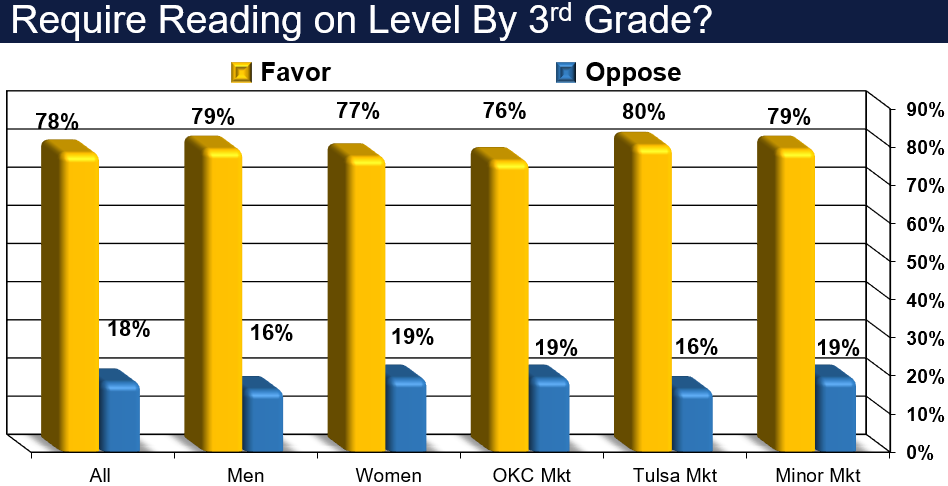
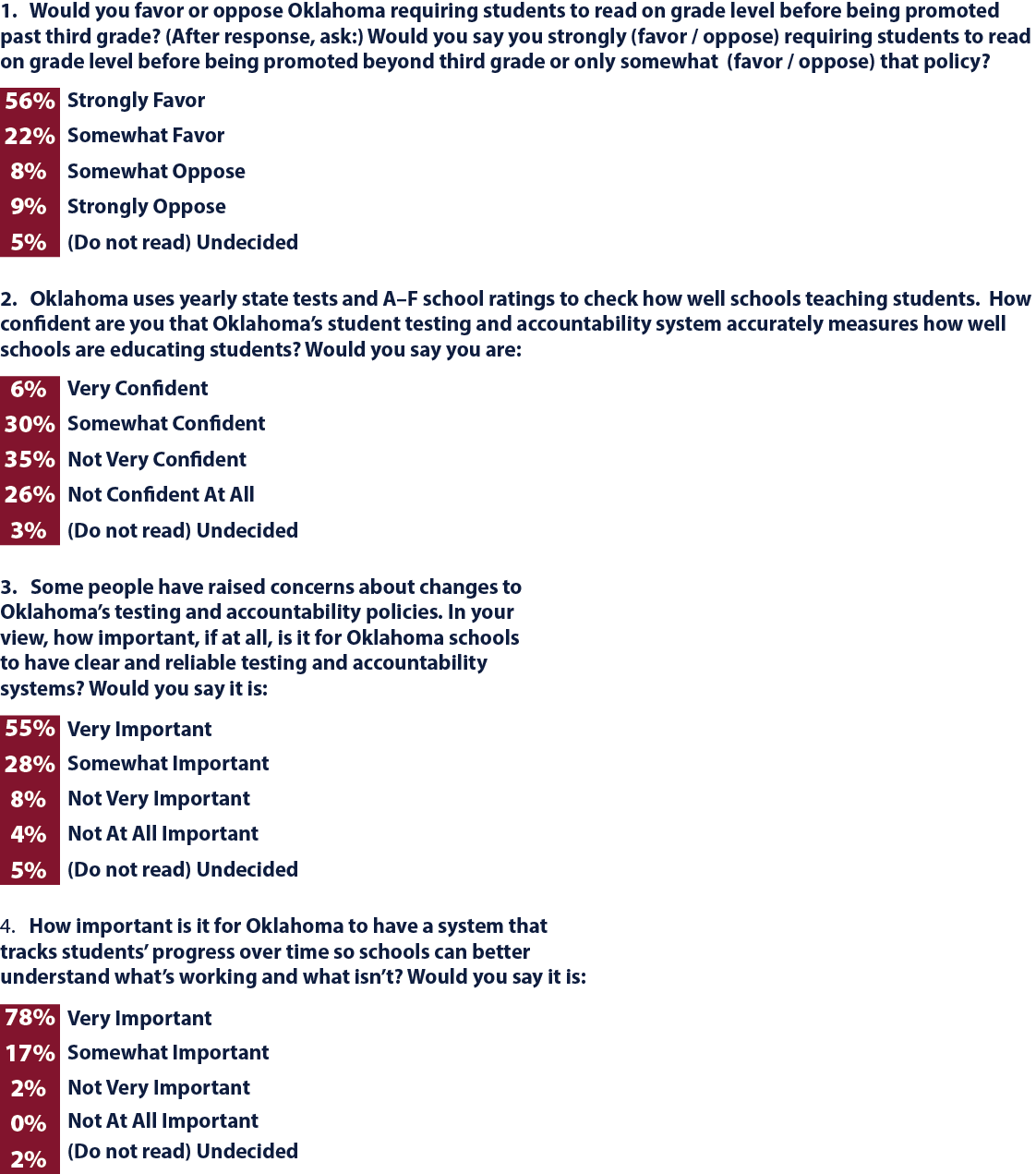
As the legislature moves its agenda, one of the key things to note is how supportive parents are of requiring students to read on a third grade level before advancing beyond that grade. Not only do 78% support this requirement, but 56% say they strongly favor it. This high level of support comes from both genders and is strong throughout the state’s media markets, geographic regions, and income groups. Perhaps most notable is that those with children who would be affected by this – those with children currently in pre-K through third grade – support this requirement by a wide margin (75% Favor / 21% Oppose).
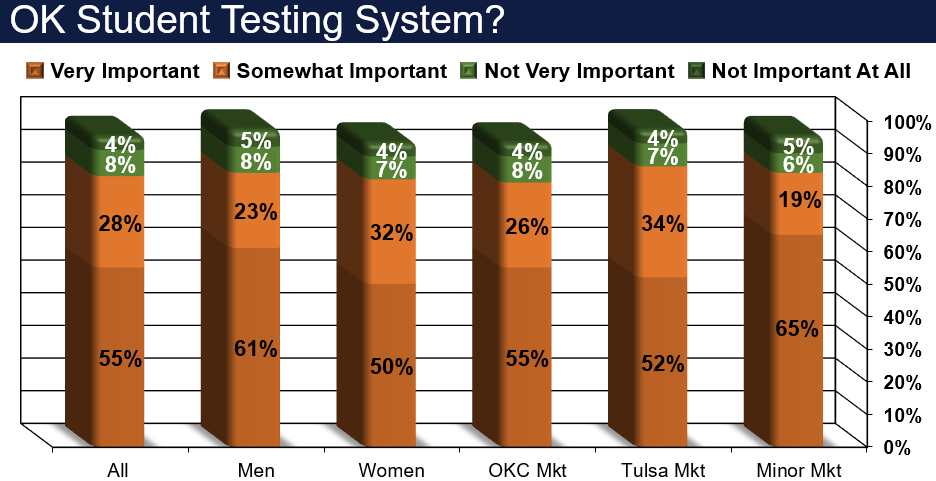
Parents also support a strong testing system. Fully 83% say a clear and reliable testing and accountability system is either very (55%) or somewhat (28%) important. Only 4% say it is not important at all. Lower-income families and those parents under the age of 45 are the most likely to say having such a system is very important. Those with children in traditional public schools are among the most likely to say such a system is important (56% Very Important; 26% Somewhat Important). For those with children online (either through a traditional public school or an online charter), the very important number drops to 45%.
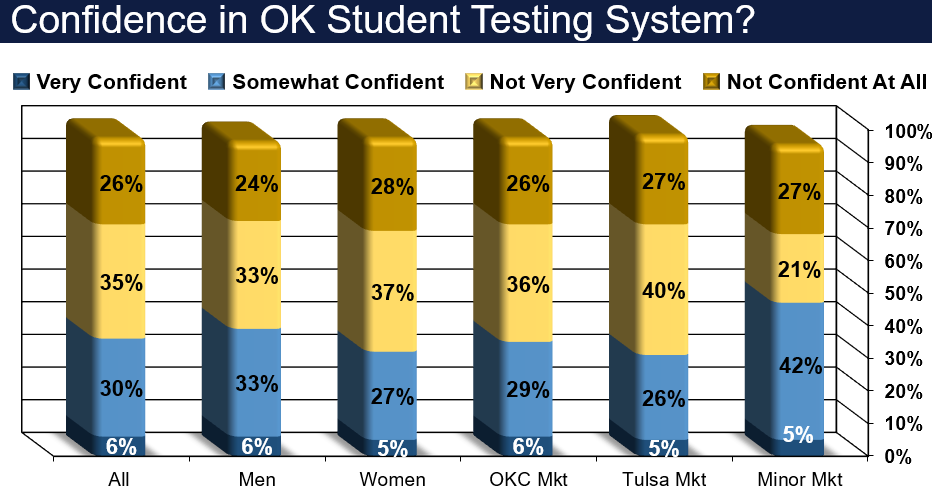
While parents want a reliable and clear testing and accountability system, they don’t believe they have it. In fact, only 6% of parents are “very confident” in the current testing while 26% say they have no confidence at all. Only 30% say they are somewhat confident and 35% say they are “not very confident” in the current system. Like many of these questions, the geographic variation are rather small. On this question, however, we do see an income line – but even among the lowest income families, only 8% say they are very confident and 18% say they have no confidence at all. For those in households with incomes in excess of $100,000 a year, 31% express no confidence at all and only 5% claim to be very confident in the current testing system.
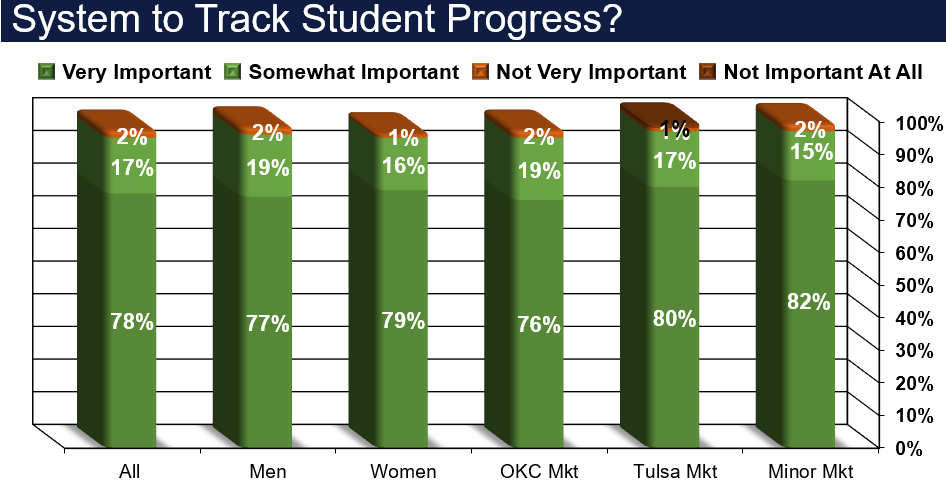
It is not just an annual testing system parents support. We see very strong support for a student tracking system over time. In fact, 95% see this as at least “somewhat” important and a remarkable 78% saying it is very important. Parents clearly see the benefit this longitudinal data would provide for schools and the insight it could provide to schools on what is and is not working when it comes to educating students. Those in households with incomes of less than $50,000 are the most supportive of a year-to-year tracking system (88% Very Important; 12% Somewhat Important). We see strong support among those with a child in traditional public schools (80% Very Important) and those using a private school (78% Very Important). The key takeaway from this study is that Oklahoma parents of school-aged children strongly support data related to the progress of their students. They expect students to read on level before being promoted to fourth grade. They embrace a testing system that instills accountability and believe having one is important. And, they support a system that tracks student progress. It is clear Oklahoma parents are ready to create guardrails for the state’s school system. ◊





Recent Comments