
Sooner Survey: Volume 37 No. 7 | May 12, 2026
By Pat McFerron, President
Cole Hargrave Snodgrass & Associate
 @McFerron
SQ 832 with modest lead in unique turnout environment
When the effort to increase Oklahoma’s minimum wage was launched, no statewide initiative to raise the minimum wage had been defeated at the ballot box anywhere in America in almost 30 years. But in 2024, California of all places, rejected an increase to $18 an hour. Now, Oklahomans will largely be credited with determining if this was an anomaly or if the inflation of recent years has changed voter perception. Our current study shows that while the contest is not over, if it were held today, SQ 832 would pass.
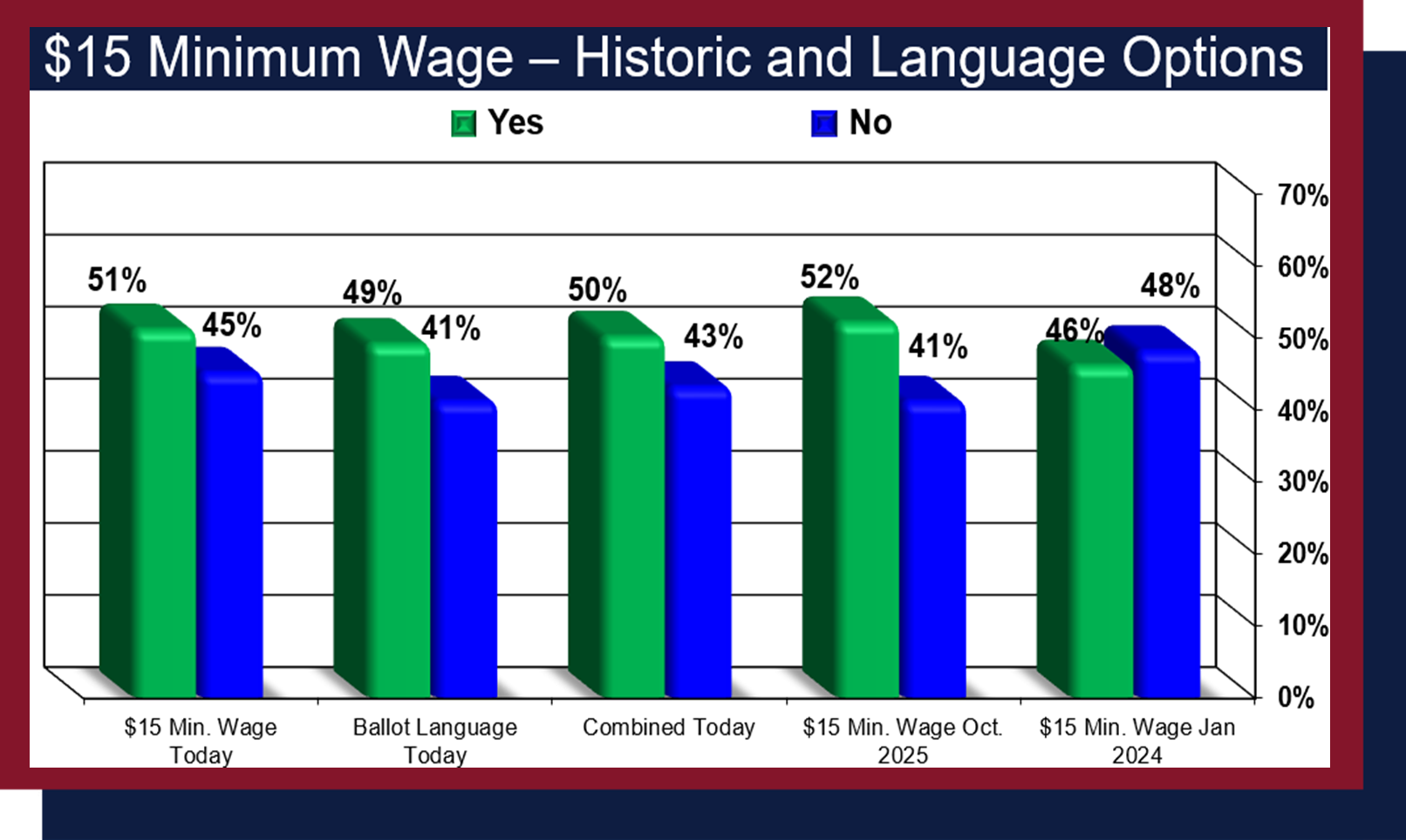
Since our last study on this topic, the ballot language has been finalized so we tested both our historic question, and a question approximating the ballot those in the voting booth will have the opportunity to read. The difference between these two approaches is rather minimal. When using our past language, we see a six-point advantage for proponents and only 4% of voters undecided. When reading the longer ballot language, the margin increases to eight points, but the more significant change is that 9% become undecided. This means that in both cases – asking as we have done so historically or with the ballot language – an identical 53% of decided voters are supportive. Because of this similarity, to look at cross-tabs, we combined these responses into an overall support for SQ 832, and all of the cross-tabulations referenced in this report come from that data.
A glance at the toplines reveals there has not been a great deal of change since last fall — especially when considering much of the change seen is actually a result of the election date, not real change in voter sentiment. Because the election date has been set to coincide with the June primary elections, our model for turnout is now much different than what we have used previously. For a general election turnout, our model shows 59% of the expected voters being registered Republicans, but the current model for June 16, 2026 has that at 69%.
Given the change in the model, one would expect the model to show opponents gain ground which they have since last October, going from being down 11 points to down six today when asked in the consistent manner. Because Republicans oppose the measure by a net of 20 points, almost half of this narrowing can be attributed to that composition alone.
The minimum wage does have a partisan edge to it, but it may not be as distinct as one might expect. While SQ 832 has a commanding lead among Democrats (83% Yes; 13% No) and Independents (84% Yes; 14% No), the opposition among Republicans (36% Yes; 56% No) is not as skewed. The reality is, if this measure is to fail, Republicans will need to become a bit more opposed, likely getting support to 30% or less.
While not as stark as the partisan alignment, we see other divisions in the state as well. While those in the two great metro regions are very positive (59% favor / 37% oppose) while it fails in rural Oklahoma (42% Favor / 49% Oppose).
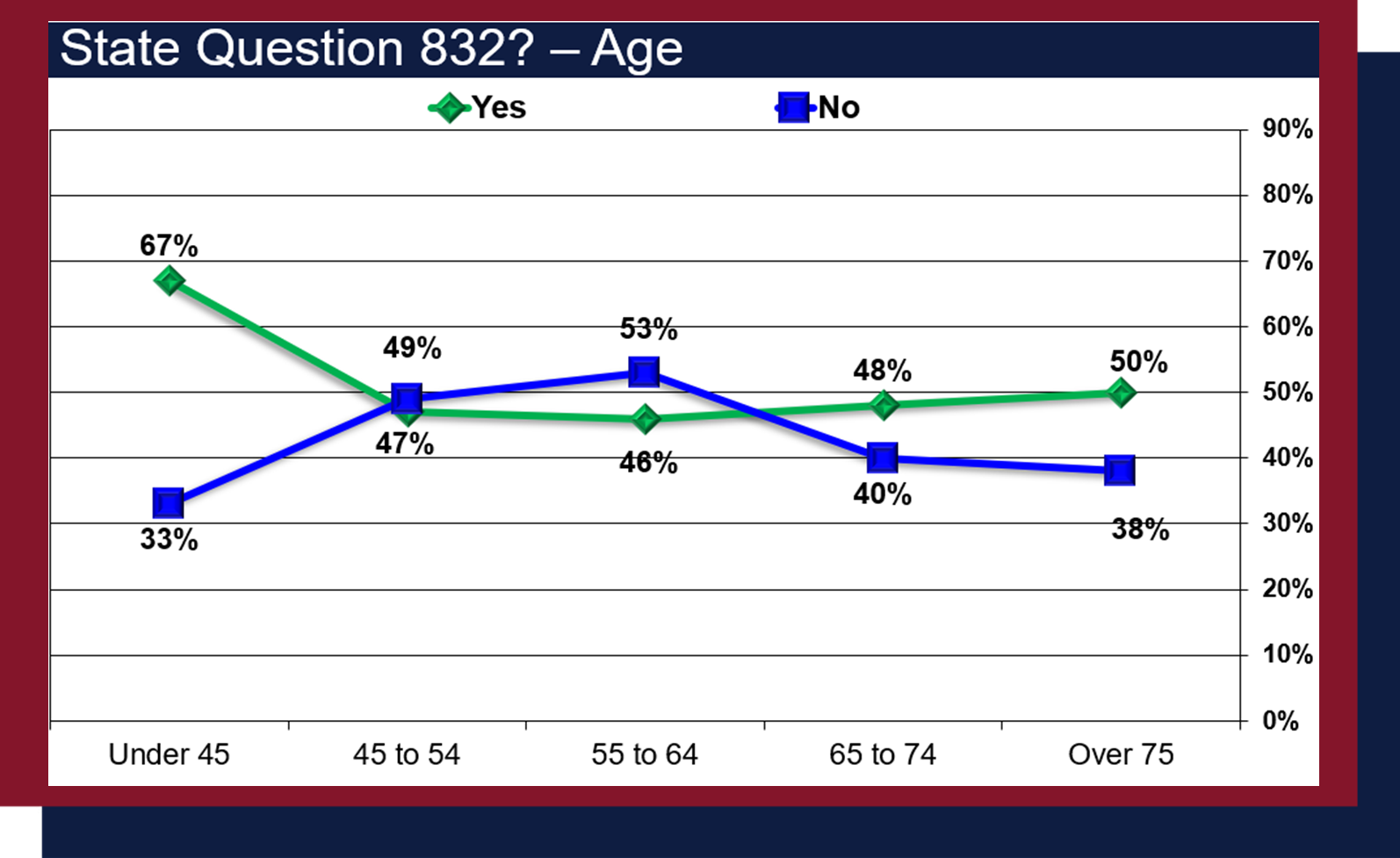
One oddity which I believe shows change can occur is that those over 65 are currently supportive (49% Yes vs. 39% No). This group tends to be the most concerned about inflationary pressures and is a very sizeable portion of a primary electorate. Just a few point change among Republicans in this age group would make a tremendous difference.
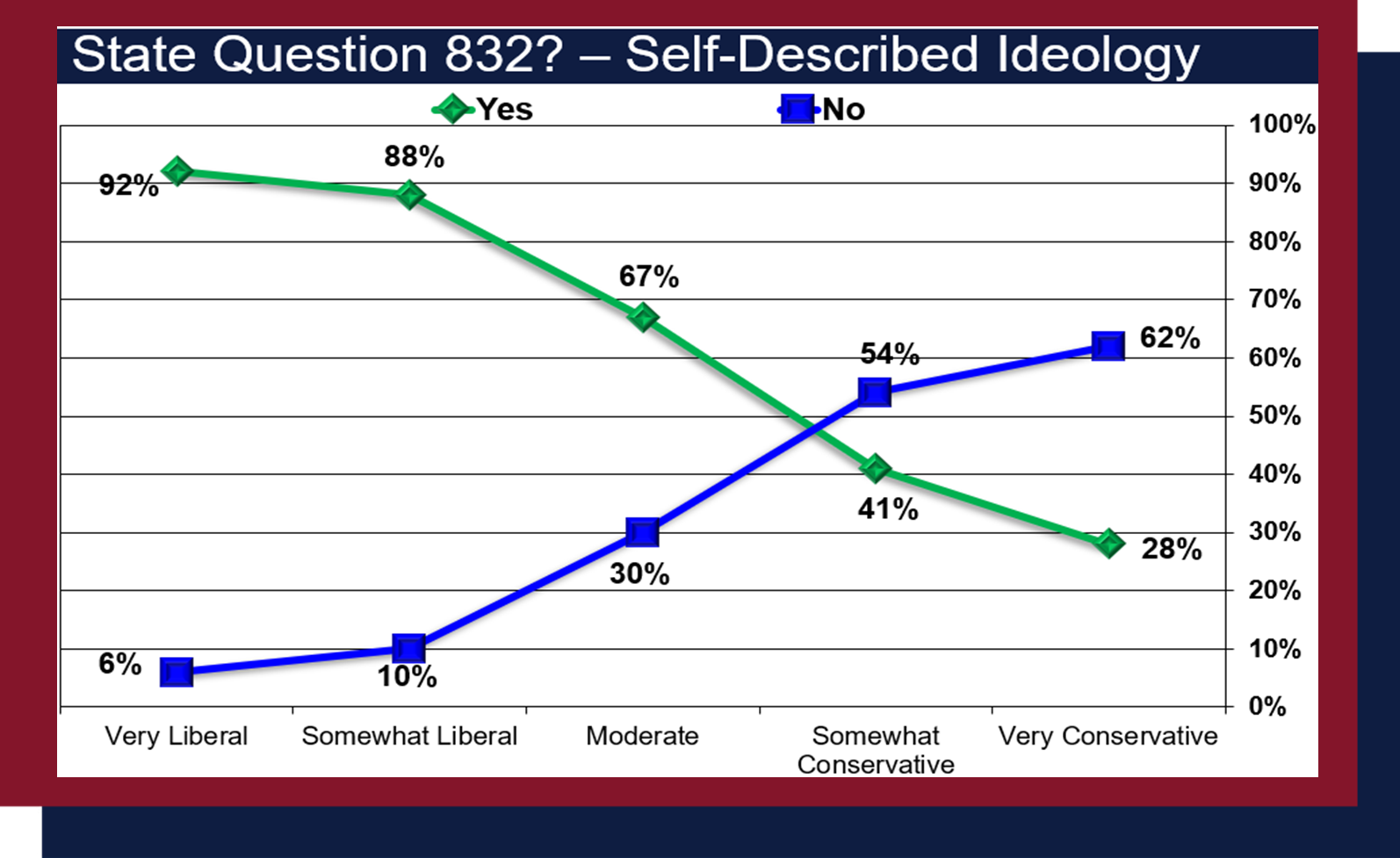
Another place I would anticipate movement is among conservatives. While conservatives break against SQ 832, they do not do so in the manner to the degree we tend to see them break. Right now, the 54% who self-identify as “very conservative” are against this measure by a two-to-one margin (28% Favor / 62% Oppose), far below the near unanimity of liberals (90% favor). The question really becomes do these conservatives break against in strong numbers, like they did on SQ 805 (proposed CJR reform of 2020) or the Boren Sales Tax proposal (SQ 779 of 2016) — both of which saw support less than a month from the election day — or do they stay split like they did on Medicaid Expansion (SQ 802 of 2020). ◊





Recent Comments