
Sooner Survey: Volume 37 No. 11 | August 20, 2026
By Pat McFerron, President
Cole Hargrave Snodgrass & Associate
 @McFerron
There is little wonder that so much focus is on the Republican runoff for governor, and so little attention being paid to the Democratic runoff for U.S. Senate. This is because the Republican runoffs almost certainly will determine the next officeholders, and the Democrat runoff is likely no more than deciding which lamb to be sacrificed.
This should not be a surprise – it has been 20 years since any Democrat won a statewide contest. Not since Jari Askins’ victory in the LG race has a Democrat won an open statewide seat – and that was a unique circumstance with a popular Democrat governor running for reelection and a heated Republican primary and runoff election that, at the time, was unprecedented in the state.
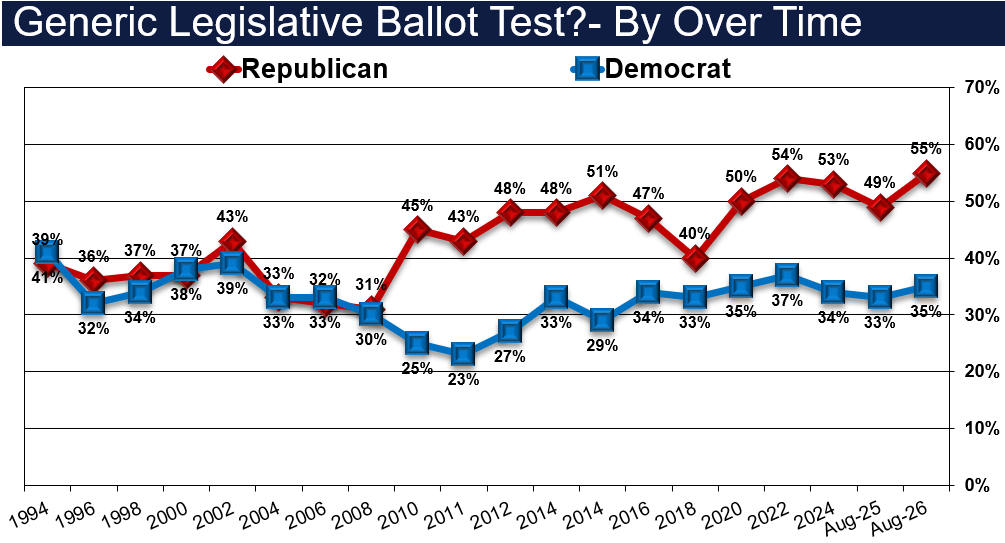
A key way we gauge party dominance is through the use of a generic ballot question. We simply ask voters if they plan to vote for the Republican or the Democratic candidate in their state legislative contest. We have been tracking this since 1994, and the recently recorded R+20 is the widest we have recorded since 2014 and has only been eclipsed twice. Up until 2008, the parties were rather event, with no party ever holding more than a four point advantage. Even in 2018, in the aftermath of the teacher walkout, when Republicans had only a seven-point advantage, we saw a Republican sweep despite an extremely well-known Democrat at the top of the ticket. Currently, a generic Republican starts with support from 55% of Oklahomans – making it very difficult for one to lose in a race that is only to 50% (or less if there are Independent or third party candidates).
The potential dominance may not be felt as much in the two great metro areas – because that is where things are changing. Currently, when looking in the six counties making up those areas, we have essentially a tie on the generic ballot (45% Republican vs. 46% Democrat). However, in the 71 more rural counties, Republicans simply dominate (66% Republican vs. 23% Democrat). Given that the state’s voters are close to evenly split between those two groups, it is easy to see why, on a statewide basis, Republicans are heavy favorites.
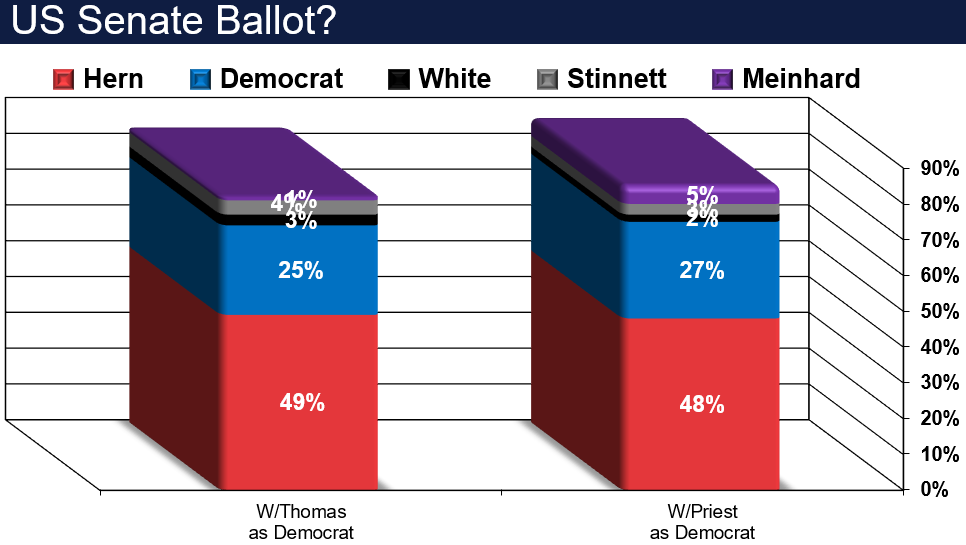
For the contests that are already settled, we see Republican dominance. In a ballot-test against N’Kiyla Jasmine Thomas, Kevin Hern holds a 24-point advantage (49% Hern vs. 25% Thomas) with the other candidates receiving a combined 8%. Against Jim Priest, the contest is similar with Hern having a 21-point lead (Hern 48% vs. Priest 27%), and the other candidates combining for 10%. Complicating matters for Democrats is that Hern still has a great deal of room to grow. Currently, his soft-name ID is 73% and only 49% have formed an opinion of him. A great deal of rural voters are still undecided in both matchups, as are more than 10% of Republicans.
We also see strong Republican strength in the top down-ballot contests that have been settled – and they are largely a reflection of the generic ballot.
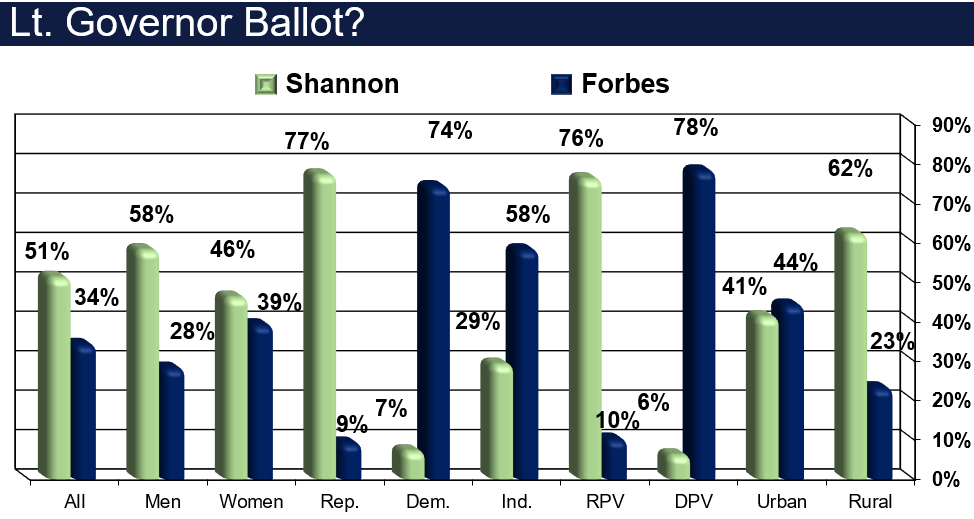
In the Lieutenant Governor’s contest, Republican nominee T.W. Shannon holds a 17-point lead and is already above 50% (51% Shannon; 34% Forbes). Again, we see room for Shannon to build on his lead as 14% of Republicans are undecided and we see significant percentages of conservatives also not yet making a decision. Shannon dominates among men (58% Shannon vs. 28% Forbes) and has a healthy lead among women (46% Shannon vs. 39% Forbes).
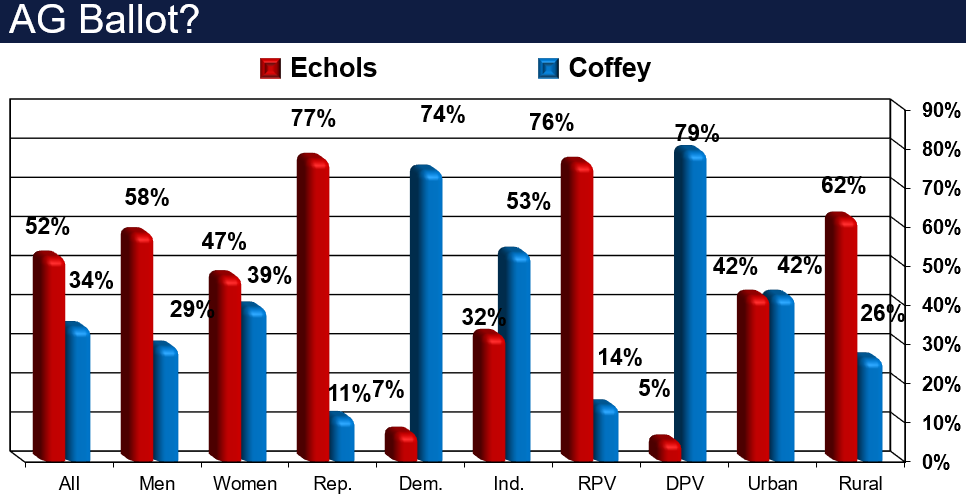
The contest for Attorney General is likely even more illustrative of how dominant the Republican generic ballot can be. Despite coming off a bruising primary in which millions of dollars were spent against him, Jon Echols has an 18-point lead over Democratic nominee Nick Coffey (52% Echols; 34% Coffey). As with the generic ballot, the US Senate contests, and the LG race, the metro areas are more competitive and the Republican dominates in the 71 rural counties.
What makes the Republican dominance this year so striking is that traditional indicators – like the negative opinion of the direction of the state, poor favorability ratings of a Republican incumbent governor, and a Republican president who divides the state – would all point to a positive environment for Democrats. Despite this, we still see Republicans starting with around a 20-point lead. There is little doubt, some of this is because many Oklahomans are dissatisfied not just with Republicans, but with both parties. In the future, we will be testing the rise of Democratic Socialists and their impact on Oklahoma Democrats and Oklahoma voters. Right now, suffice it to say that in Oklahoma, even if Republicans are not embraced, they are still preferred to Democratic options.
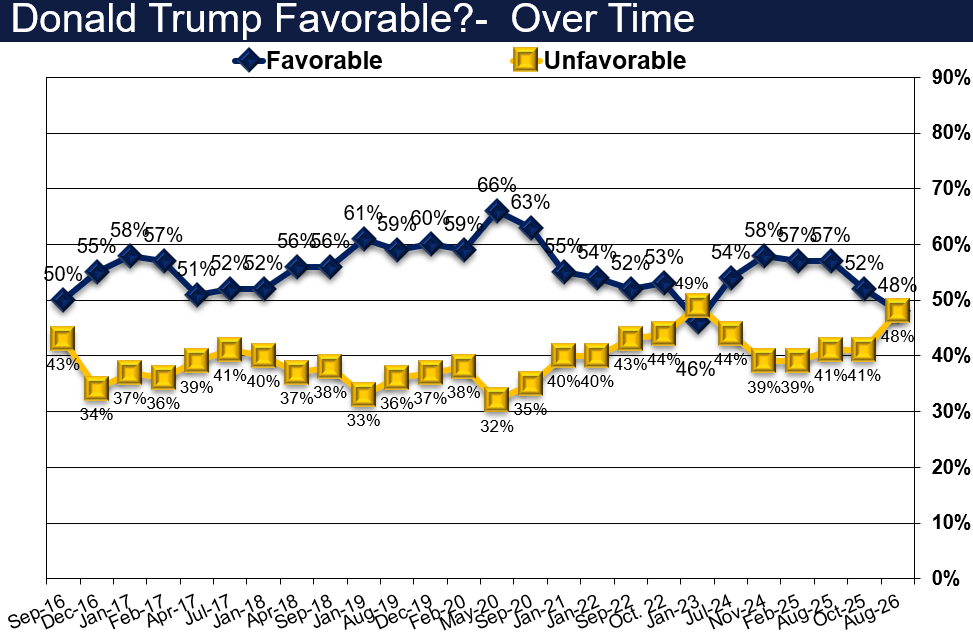
The fact that the August Republican runoffs will essentially decide who is the next Governor, State Superintendent, Insurance Commissioner, and Labor Commissioner will be make it even more vital that those eligible participate in this contest. Most estimate a turnout of around 320,000 – or 8% of the state’s 4 million residents. As only 50% of those who vote are necessary to win, that means approximately 160,000 voters (or 4% of 4 million) will decide who leads the state for the next eight years. If you are turned off by the negative advertising or the focus on marginal issues and choose not to participate because of this frustration, you are helping perpetuate this system.◊





Recent Comments